Wall panels in cafés, apartments, and offices: how a business space looks premium and stays cheap to maintain
In a home, a wall can wait. In a business space, it cannot. A guest who walks into a café, apartment, or office forms an impression in a few seconds — and that impression rarely changes. At the same time, every day a venue is closed for works is a day without revenue, and every wall that needs repainting every two years is a cost that keeps coming back.
That is why more and more café, apartment, and office owners in Montenegro are choosing wall panels. This article covers where panels pay off most in commercial spaces, which type belongs in which zone, and what to check before you book installation.
What a business space needs from a wall
A wall in a venue has a harder life than a wall in a flat. It takes suitcases and chairs, grease and steam from the kitchen, daily cleaning, and hundreds of touches a day. Paint lasts a season or two, then starts to peel and stain. Wallpaper lifts at the first damp spot. Tiles last, but grout darkens and needs scrubbing — and changing the pattern means demolition.
A panel solves exactly those three things: it is installed dry and fast, often over the existing substrate; the surface is smooth and grout-free so it wipes with a damp cloth; and it lasts for years without refreshing. As Decofigura notes, unlike paint and wallpaper that need constant upkeep, panels are made to withstand intensive use in restaurants, hotels, and offices, while also defining the identity of the space. A similar conclusion comes from the hotel interiors overview on iGoodsDeco: painted hotel walls need repainting every few years, while panel systems last 10 to 20 years with minimal attention.
The basics of installation and maintenance that apply to all spaces are in our wall panel installation and maintenance guide. Here we focus on what is specific to commercial spaces.
Space by space: which panel where
Cafés and restaurants
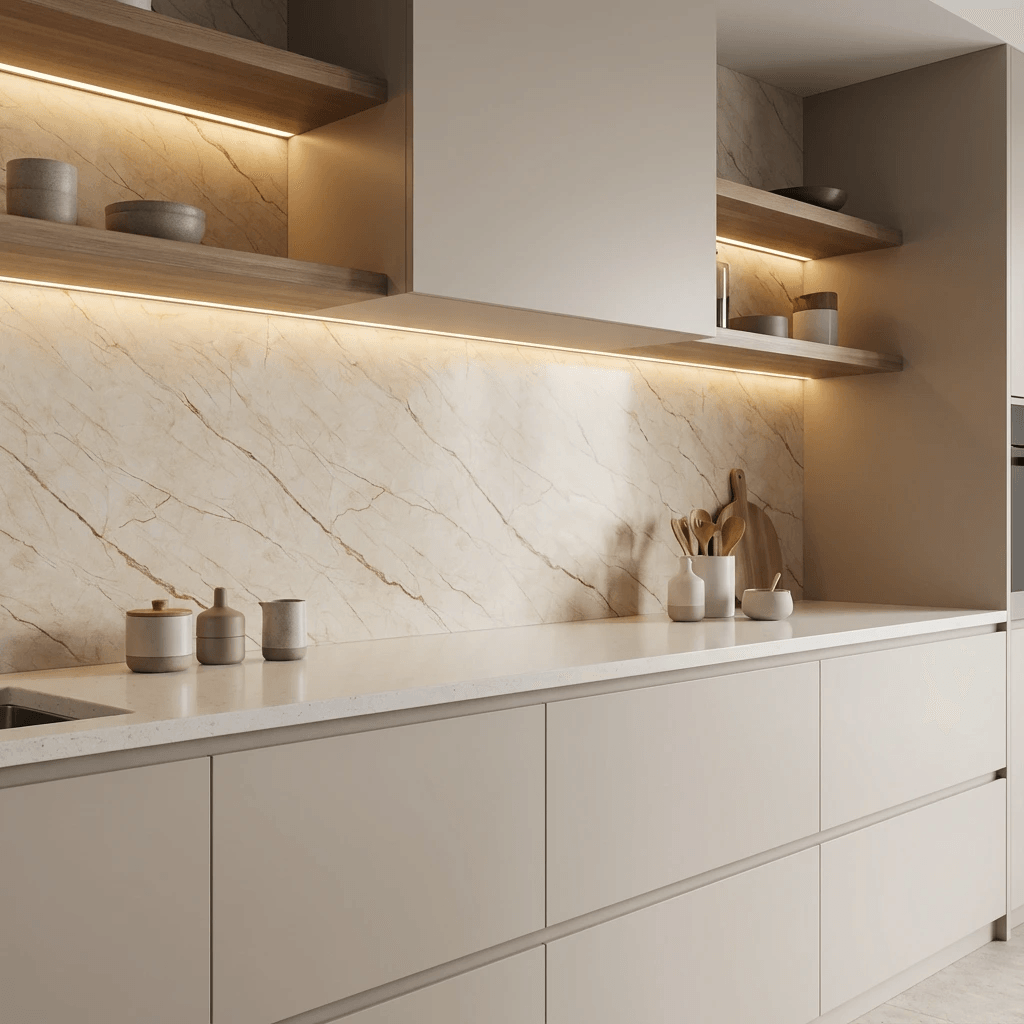
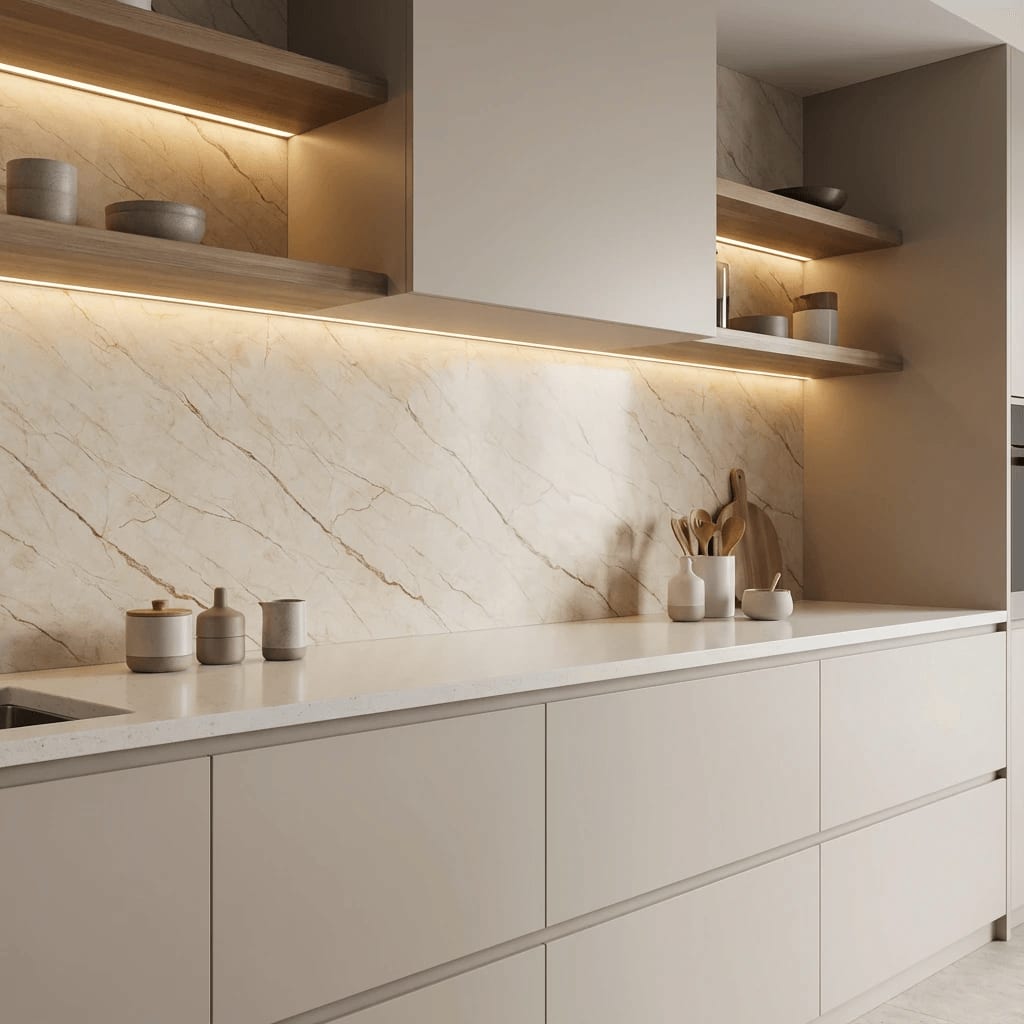
Hospitality interiors have two kinds of walls: the ones guests look at, and the ones staff get dirty. For the wall behind the bar, along the kitchen passage, or next to worktops, PVC panels are the logical choice: 100% waterproof, no grout that collects grease, and they can go over existing tiles without closing the venue for days. The same principle we described for a kitchen splashback at home applies here, just at a larger scale — see also Can panels be used between shelves and the worktop in the kitchen.
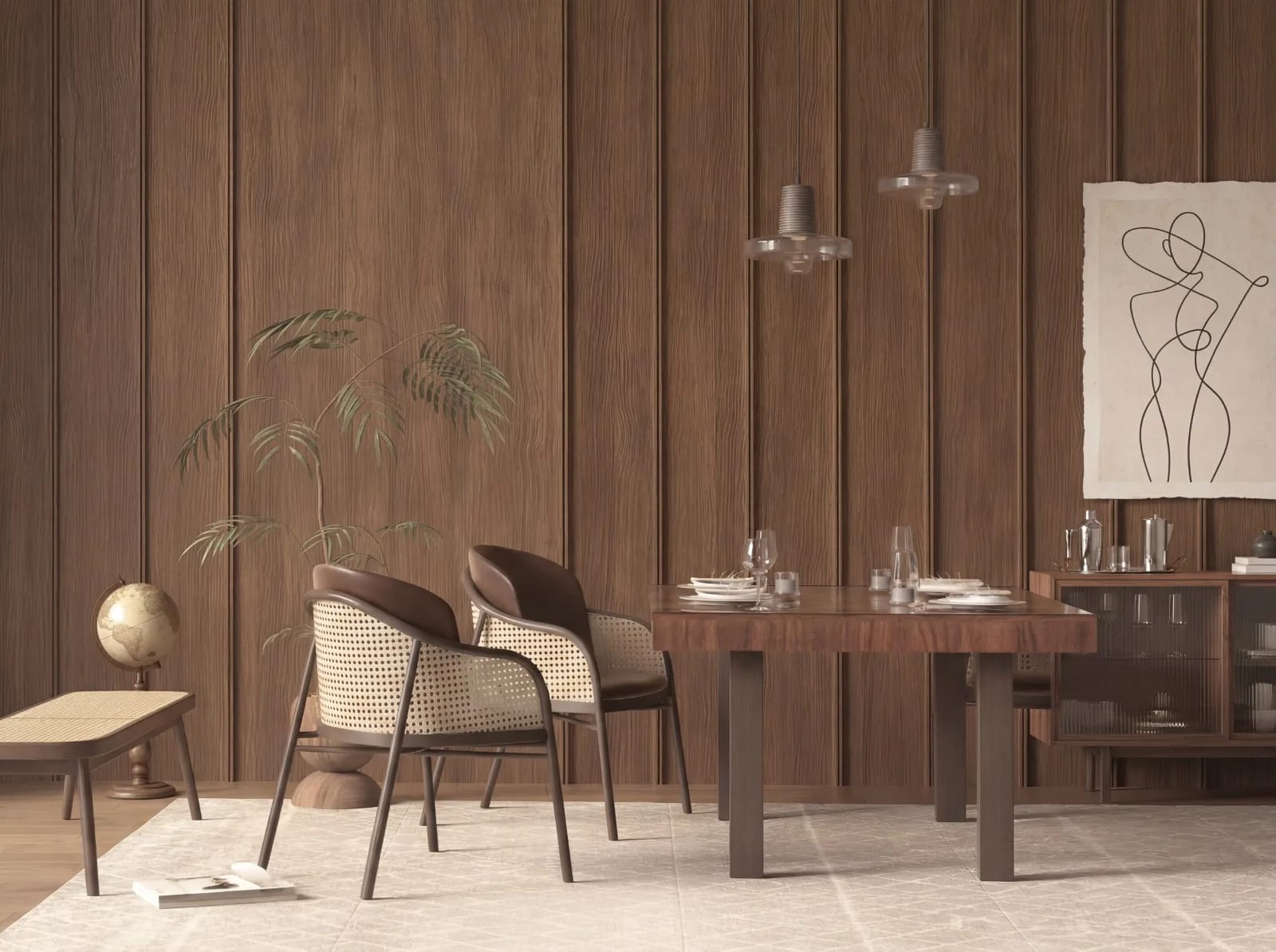
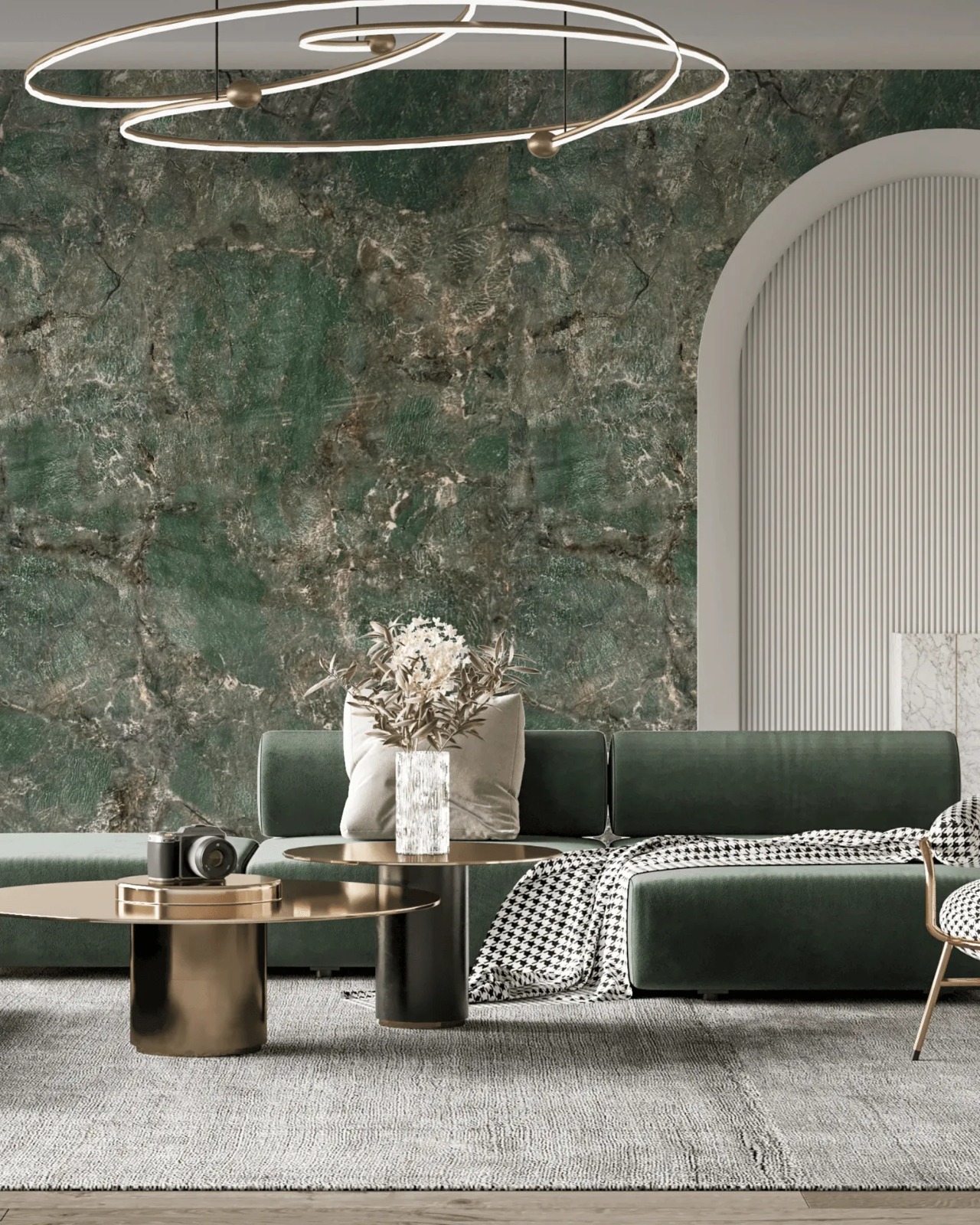
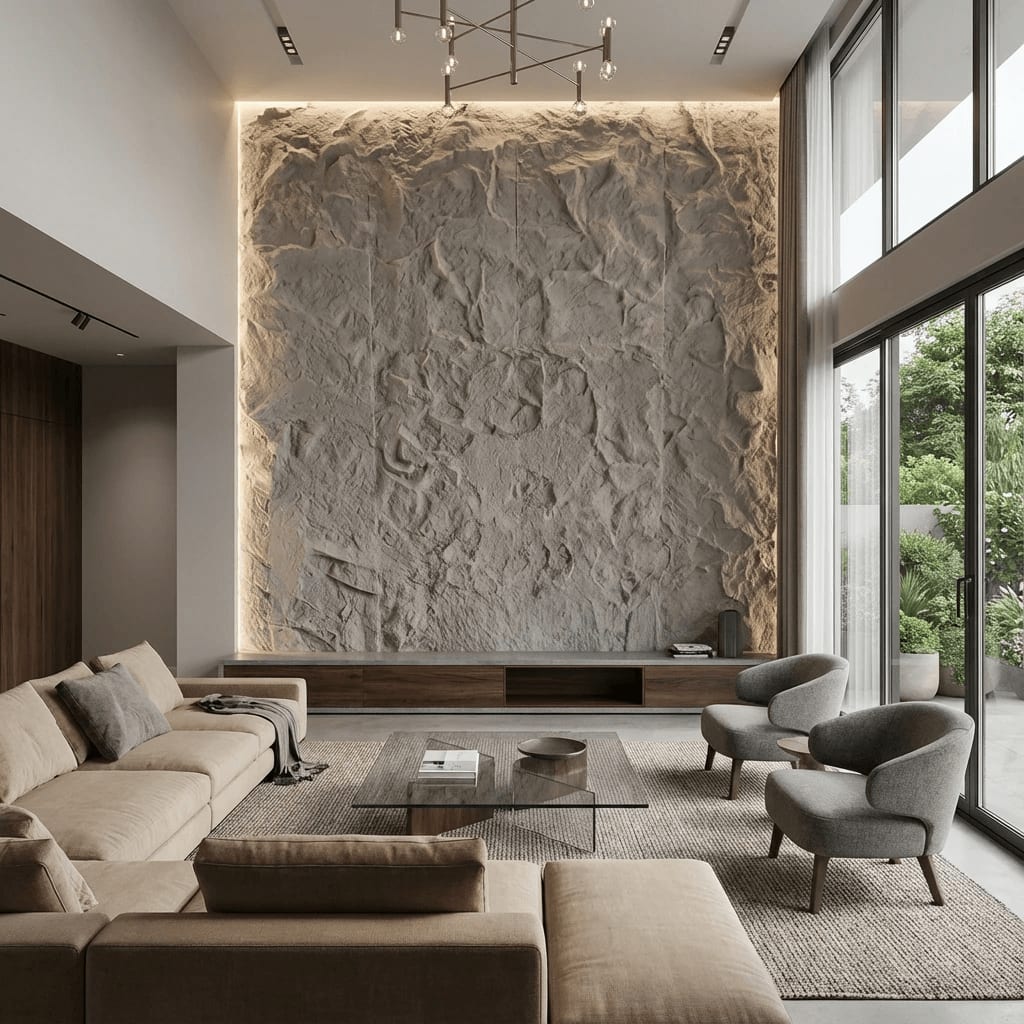
For the dining room, where atmosphere matters, Carbon panels with a wood pattern or Rock panels with stone texture bring warmth without the maintenance real wood or stone require. One accent wall behind the main table, or in the zone guests photograph most, is often enough for the venue to be remembered.
Apartments and small hotels
Owners of rental apartments have a specific problem: the bathroom is used intensively, guests change every few days, and every darkened grout line ends up in a review. Marble-effect PVC panels in the shower zone solve exactly that. We covered this in detail in PVC panels as an alternative to tiles and Are PVC panels suitable for bathrooms.
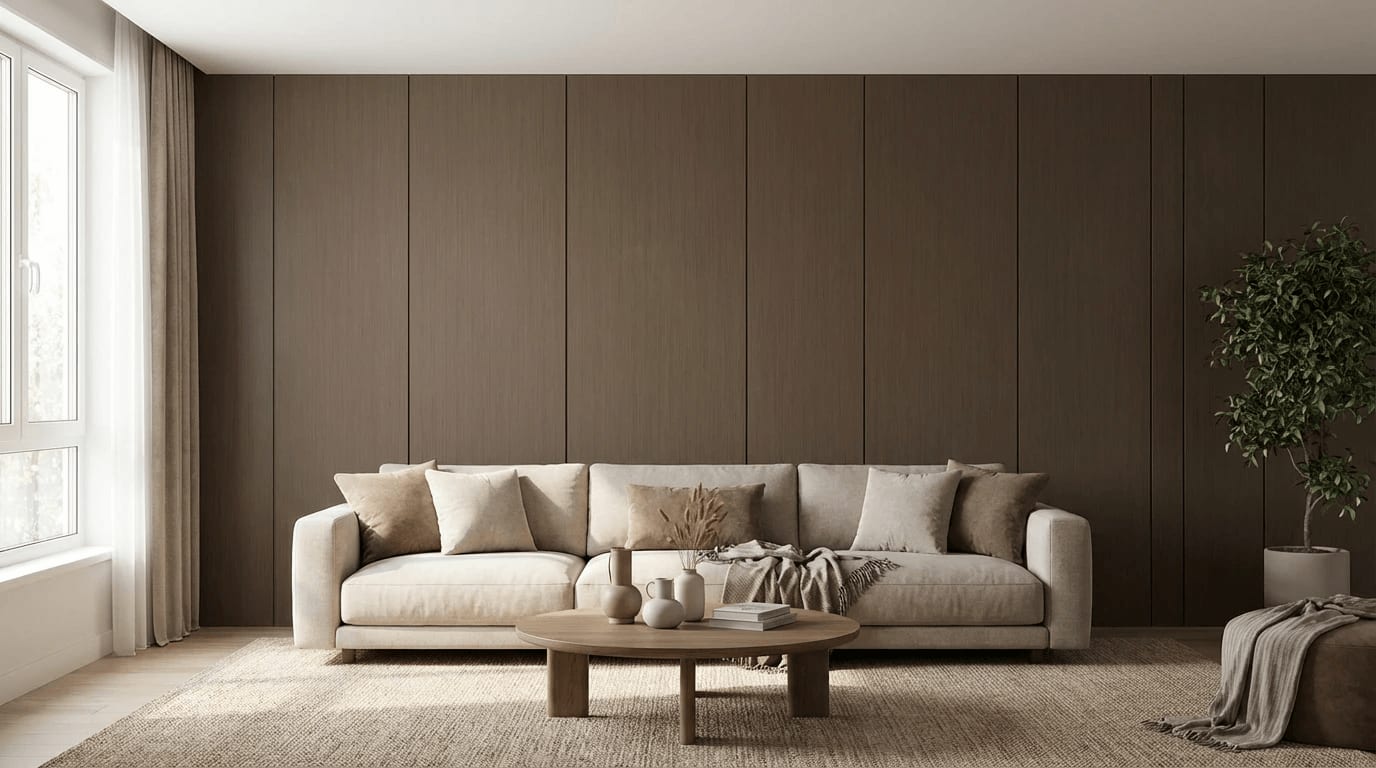
In rooms and hallways, where suitcases and cleaning trolleys scrape the walls every day, Carbon panels up to about 120 cm or to the ceiling protect the wall and give a consistent look throughout the property. That is one of the simplest ways for a small hotel or apartment block to look like a higher standard.
Offices and commercial spaces
In an office, the wall behind reception and the wall in the meeting room carry the company’s identity. 3D panels with relief add depth that plain paint cannot, and in larger open-plan spaces a textured surface visually breaks up long walls. For hallways and waiting areas, where calm and order matter, light-tone PVC panels in the large 120 × 280 cm format mean fewer joints and less visual noise — the same effect we described for hallways in older flats.
Terraces and entrances
A summer terrace and the entrance zone of a venue work under sun, rain, and, on the coast, salt in the air. For those surfaces there is a dedicated category: exterior panels in WPC, resistant to UV and moisture. More in Exterior panels: why your facade and terrace deserve a better material.
Three things a business-space owner should check
Fire reaction certificate. For public and hospitality spaces this is not a detail. Flex Decor panels have class B1/C certification according to EN 13501-1; you can see the documentation on the Security and quality page.
Substrate and installation method. Panels are glued to a flat, dry, solid substrate or fixed to battens. They can go over tiles, metal, and unplastered walls — we wrote about that here. For venues with condensation (kitchens, rooms without ventilation), batten installation leaves an air gap and extends the life of the panel.
Work schedule. One accent wall is finished in a few hours; a complete apartment bathroom usually in one working day. For larger properties, installation can be done zone by zone so the venue does not stop operating.
What it actually costs compared with the alternative
The comparison that makes sense is not the price per square metre on installation day, but the cost over five seasons. A painted wall in a high-traffic zone needs refreshing every one to two years, with closures and labour each time. Tiles in a venue kitchen need grout cleaning and occasional regrouting. A panel is installed once, wiped with a damp cloth, and if needed a single section is replaced without breaking the wall. Added up, the difference is usually on the side of panels — and the space looks newly finished the whole time.
If you want to see how this looks in real spaces, browse our completed projects, including commercial and hospitality interiors.
Conclusion
A business space works under pressure: high guest expectations, intensive use, and the cost of every day without revenue. Wall panels answer all three: they go up fast and clean, look like a higher-grade material, and need little attention for years. PVC for wet and work zones, Carbon and Rock for dining rooms and guest rooms, 3D for reception and meeting rooms, WPC for the terrace.
If you are planning a renovation of a venue, apartment, or office, get in touch or visit the showroom at Slovačka 15 in Podgorica. A site visit, substrate assessment, and material recommendation are free and with no obligation. Browse the full range on all products.
Also read: Wall panel colour and texture trends for 2026/2027 and Small change, big difference: how wall panels transform a space without renovation.