Exterior panels: why your facade and terrace deserve a better material
When people renovate, attention almost always goes to interiors: bathrooms, hallways, and living rooms. Exterior areas are postponed, because facade and terrace work seems expensive and complex. In reality, with the right material, exterior wall cladding can be both efficient and long-lasting.
What are exterior panels, and what are they used for?
Facade panels and exterior wall cladding are not the same as interior PVC panels. Their primary role is to protect buildings from rain, frost, UV exposure, and wind, while delivering a clean visual finish that lasts for years.
Why material choice matters outdoors
Direct sunlight, day-night temperature shifts, moisture, and sea salt in coastal air place constant stress on exterior surfaces.
- Natural wood looks great, but it requires regular coating and maintenance.
- Plaster can be affordable at first, but may crack due to thermal movement.
- Ceramic cladding is durable, yet heavier and often more expensive to install.
WPC: combining the strengths of wood and polymer
WPC (wood-plastic composite) panels combine wood fibres and polymer components to achieve better weather resistance with lower maintenance compared to traditional timber.
Thanks to UV-stabilized surfaces, colour retention is stronger over time, even in areas with intense sun exposure. That makes WPC an excellent option for facades and terraces in demanding climates.
Where exterior panels are most commonly installed
Typical applications include lower facade zones, terraces, balconies, fences, and smaller outdoor structures. They are especially practical for holiday homes and seasonal properties where owners want minimal upkeep between visits.
Two available models: Teak and Dark Gray
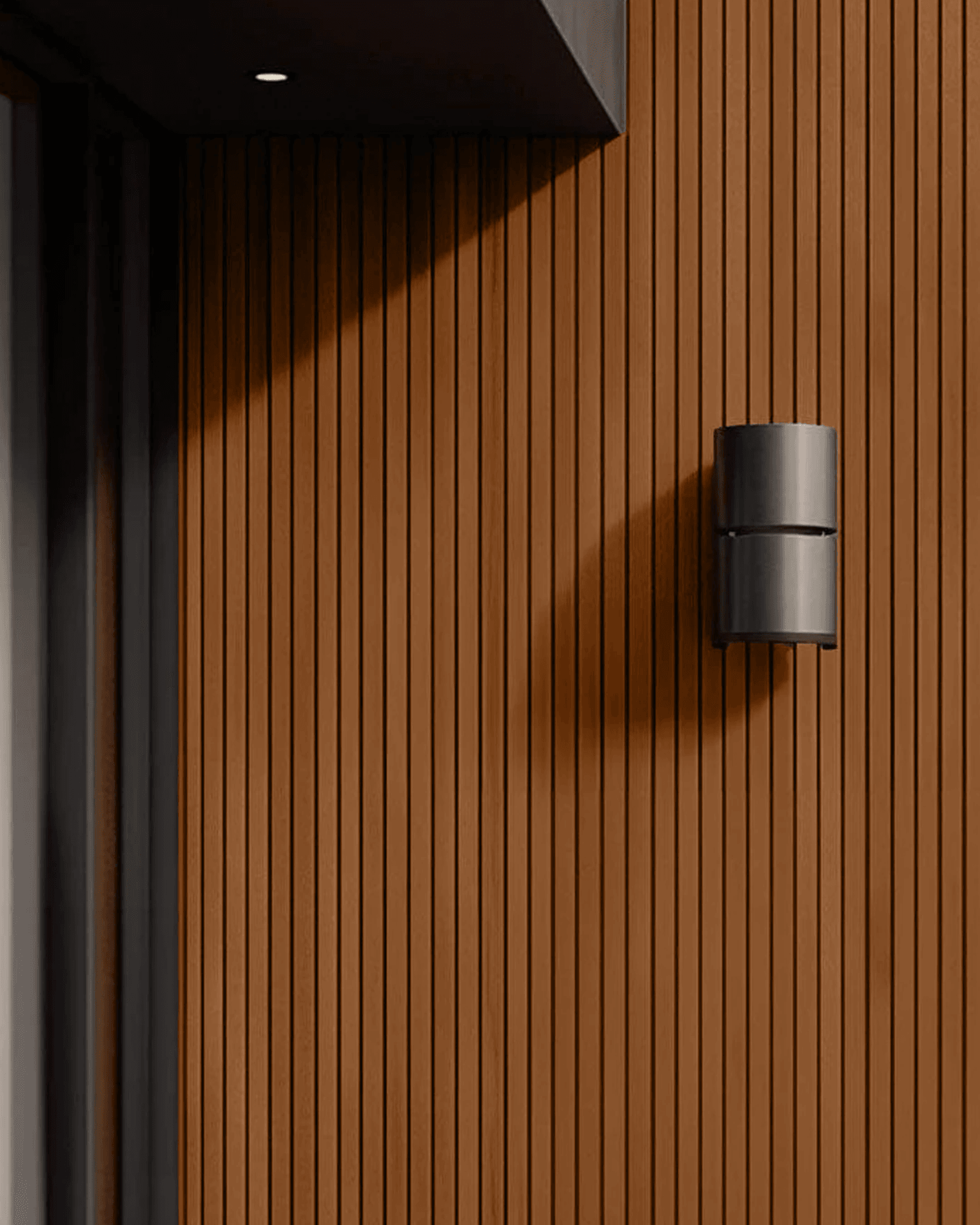
Flex Decor currently offers two 3D exterior panel models: 3D Outdoor Teak and 3D Outdoor Dark Gray. Both are available in 290 × 16.6 cm format with 5 cm thickness, helping reduce visible joints on larger wall areas.
Teak brings a warmer, natural look that pairs well with timber, stone, and greenery, while Dark Gray fits modern architecture with glass, concrete, and metal.
Installation without major construction downtime
Installation is simpler than many homeowners expect. Panels can be fixed to battens or directly to a prepared flat substrate, without long drying times and without heavy construction debris.
Compared with traditional facade systems, projects are faster, cleaner, and can often be completed within a few days.
Conclusion
Your home exterior deserves the same attention as your interior. If you want lower maintenance, long-term durability, and a modern finish, exterior wall panels are a practical and visually strong investment.