Wall panel installation and maintenance: a guide that saves time and money
Once you commit to wall panels, two questions appear on their own. How to install them so they last as they should, and what to do afterwards — how to clean them, what to avoid, when a panel is worn out versus simply dirty. This guide answers both sides of the story.
Substrate preparation — the step most often skipped
Neither the fix nor the adhesive alone decides how well a panel stays on the wall. The surface underneath does.
PVC panels and Carbon panels can be bonded directly to existing tiles, a flat plastered wall, or battens, but the substrate must be dry, solid, and free of greasy residue. If the wall is damp or the paint coat is not well bonded, no quality adhesive will compensate. Moisture behind the panel eventually breaks the bond, and the sheet starts to lift at the edges.
In older flats in Podgorica and across Montenegro, especially blocks from earlier decades, we recommend checking for hidden damp spots before you start, particularly in wet zones. It is a simple check that can prevent costly rework a year or two later. For how to pick the right panel in housing stock with specific constraints, see our article on wall panels in older Podgorica apartments.
For any uncertainty about the substrate, contact us and we can arrange a free site visit before you even order materials.
Adhesive fixing or battens: which method for which room
PVC and Carbon panels are most often installed in one of two ways.
Adhesive fixing is the faster option and works well on flat, dry substrates. Use a quality construction adhesive or MS polymer that fills small irregularities and lasts for years. Apply adhesive to the back of the panel in beads or dots, press the sheet to the wall, and hold for a minute or two. Follow a vertical line and do not rush.
Batten fixing is recommended when the substrate is not perfectly flat, or when panels go into rooms that may see condensation, because battens leave a small air gap behind the sheet and reduce trapped moisture. This is standard in long corridors and rooms without natural ventilation.
For heavier relief 3D panels, battens are usually the better choice because they spread weight more evenly along the wall. If you are unsure, browse our completed projects — it is easy to see which systems were used in which spaces.
Everyday maintenance — how simple it really is
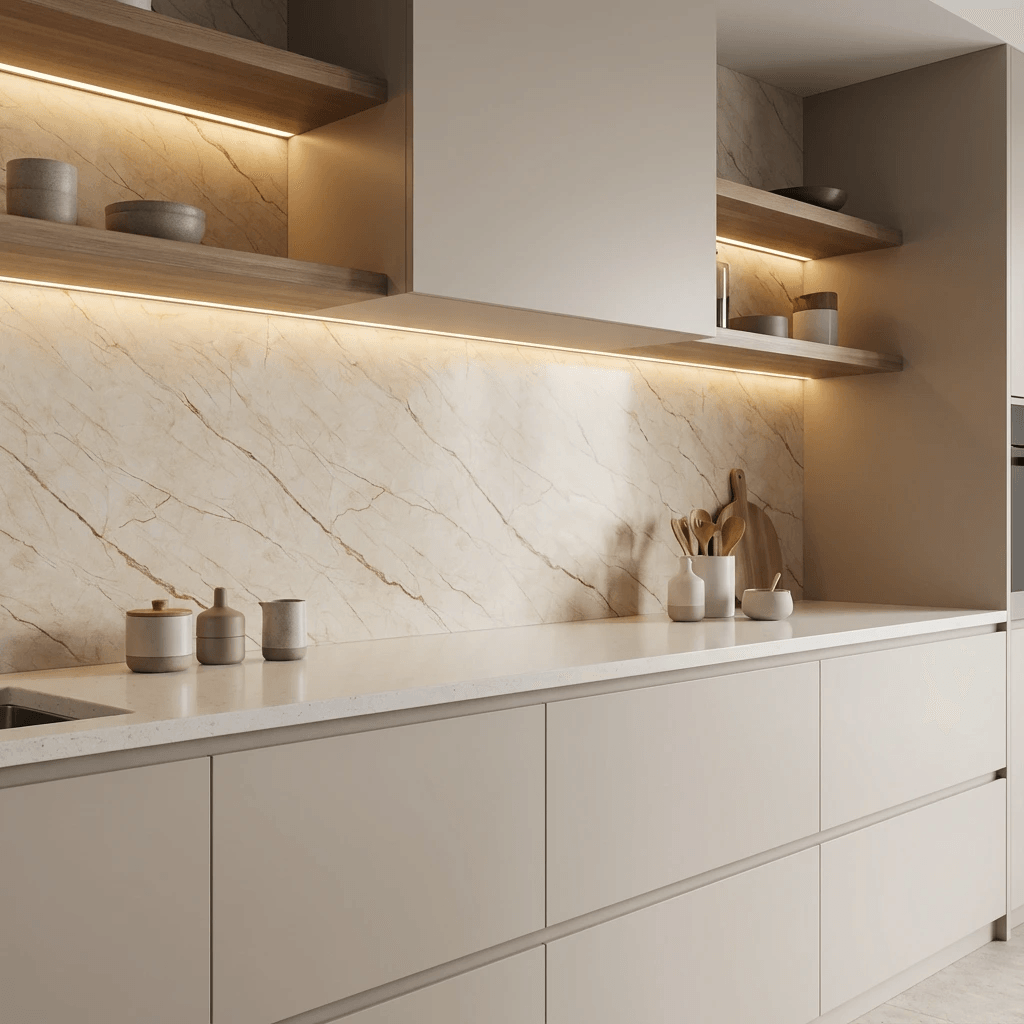
PVC panels for bathrooms and kitchens have a smooth, non-porous surface without grout lines. Dust, cooking steam, and water droplets do not penetrate the material; they wipe off with a damp cloth or a standard sponge. In its comparison of PVC bathroom wall panels and traditional tiles, National Plastics notes that the absence of grout makes them more hygienic in wet rooms.
For daily cleaning you only need:
- a damp cloth or mop for the surface
- mild kitchen or bathroom detergent diluted in water
- a soft sponge for heavier marks
Never use abrasive scrubbers, steel wool, or aggressive chemicals such as acetone or concentrated bleach — they can damage the finish and shift panel colour. The same applies to wood-effect Carbon panels: soft cloths and neutral cleaners preserve the decor texture for years.
For 3D panels with relief, use a softer brush or a pressure rinse to clean deeper grooves — dirt can linger there longer than on flat faces.
Moisture and steam: what a panel can and cannot do
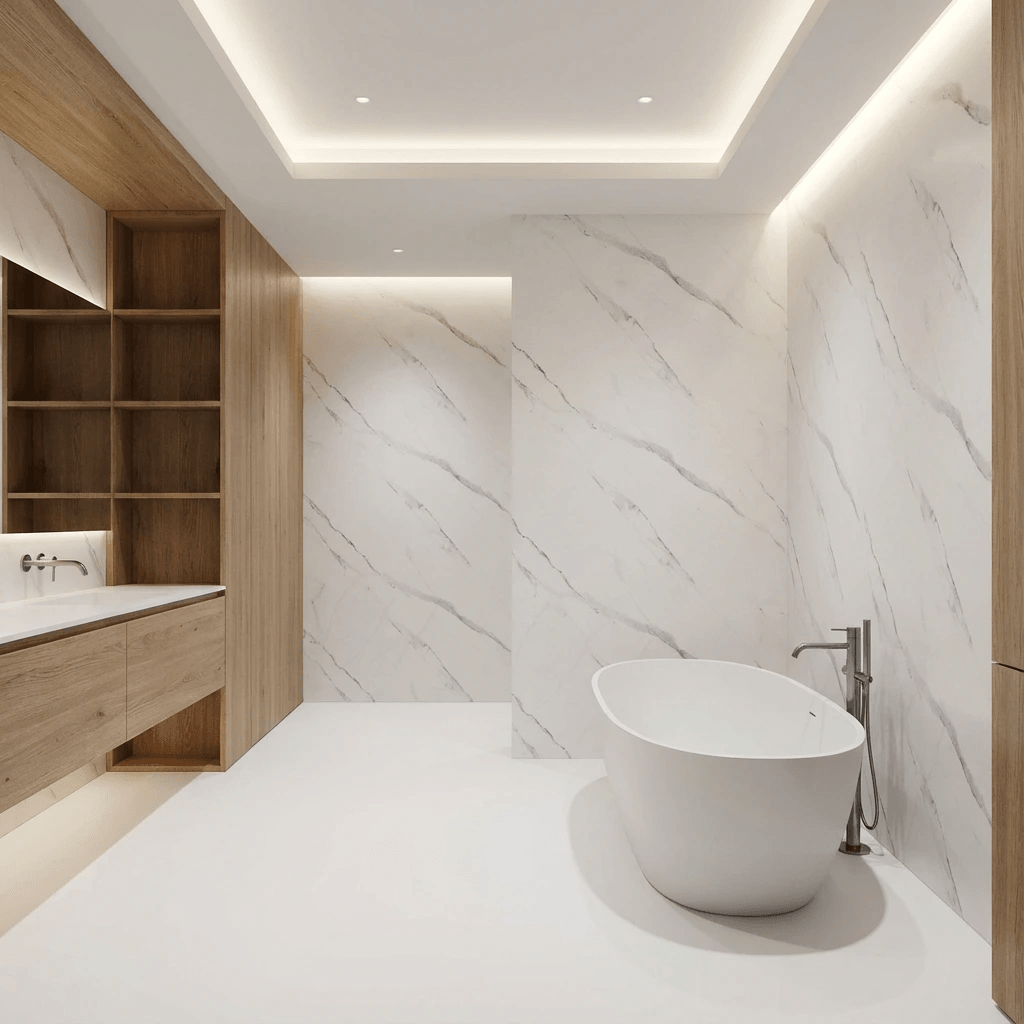
PVC panels are fully waterproof and can be used directly in the shower, above the bath, and near the basin. Steam zones are not a problem — PVC does not absorb moisture, swell, or grow mould. That is why PVC bathroom panels have become a default choice for renovations that aim to eliminate grout mould that tiles collect over years.
Carbon panels resist moisture but are not meant for prolonged direct water contact. In a bathroom they suit dry zones — the wall behind the basin, an accent wall opposite the shower — while wet zones stay with PVC.
Interior 3D panels are not waterproof and are intended for dry rooms: living room, bedroom, corridor, TV wall. For outdoor use there is a dedicated category, exterior panels, with appropriate UV and weather protection.
Longevity: what you can expect
Flex Decor panels are certified for a service life of 15+ years with correct installation and normal use. For quality standards and certificates, see the Security & quality page.
Panels carry a fire reaction rating of class B1/C to EN 13501-1, meaning they do not spread flame and are safe for residential and commercial use. That is a documented material characteristic, not a marketing claim.
In practice, longevity means a panel installed in your bathroom today will not demand attention until you choose to replace it for a style change or a wider renovation. Unlike tile grout that needs yearly or biennial renewal, there is no re-grouting, sealing, or repainting cycle here.
Practical tips to close with
If you are still planning and unsure which panel fits your room, it helps to browse all products and compare dimensions and decors directly. The 120 × 280 cm format used by both PVC and Carbon panels means fewer joints per wall.
For specific advice on installation in your case, or if you have uneven walls and non-standard dimensions — reach us through the contact form or visit our showroom at Slovačka 15 in Podgorica. Consultation is free and without obligation to order.